

Camping with your furry companions can turn a simple outdoor getaway into an unforgettable bonding experience. Whether you’re hitting the road in an RV or pitching a tent, bringing dogs and cats along requires careful planning to ensure everyone’s safety and enjoyment. This comprehensive guide draws from expert advice, real camper experiences, and common discussions in RV pet communities to cover everything from campsite restrictions to travel hacks. We’ll dive deep into pet type limitations, fence and leash rules, innovative alternatives like RV leash hooks, and the debated topic of towing with pets in the trailer. By the end, you’ll have the tools to make your next trip paws-itively perfect.
Understanding Pet Restrictions at Campsites
One of the most recurring questions in RV camping communities is about pet policies at various sites. Not all campgrounds are created equal when it comes to welcoming four-legged friends, and overlooking these rules can lead to denied entry or fines.

Restrictions on Pet Types and Breeds
Most pet-friendly campgrounds allow dogs and cats, but there are nuances. Dogs are generally more accepted, with many sites permitting multiple pets per RV (often up to three). However, breed-specific discussion is a hot topic. Certain breeds like Pit Bulls, Rottweilers, or other “bully breeds” may be prohibited due to insurance guidelines or campground restrictions. Weight limits are another common restriction; some parks cap dogs at 35-50 pounds, especially in cabins or tent areas.
Cats face fewer breed issues but more logistical ones. While dogs dominate discussions, cat owners often share tips on keeping felines contained, as many campsites require all pets to follow the same rules. Exotic pets or other animals (like birds or rabbits) are rarely allowed, and national parks frequently ban pets from trails altogether, limiting them to leashed areas in parking lots or campgrounds. Always check ahead: Call the campground or review their website for policies, and email proof of vaccinations (like rabies certs) if required.
Recurring community questions include: “Does this park allow large breeds?” or “Can I bring my indoor cat?” Answers vary by location—private RV parks tend to be more flexible than state or national ones.
Restrictions on Fences and Enclosures
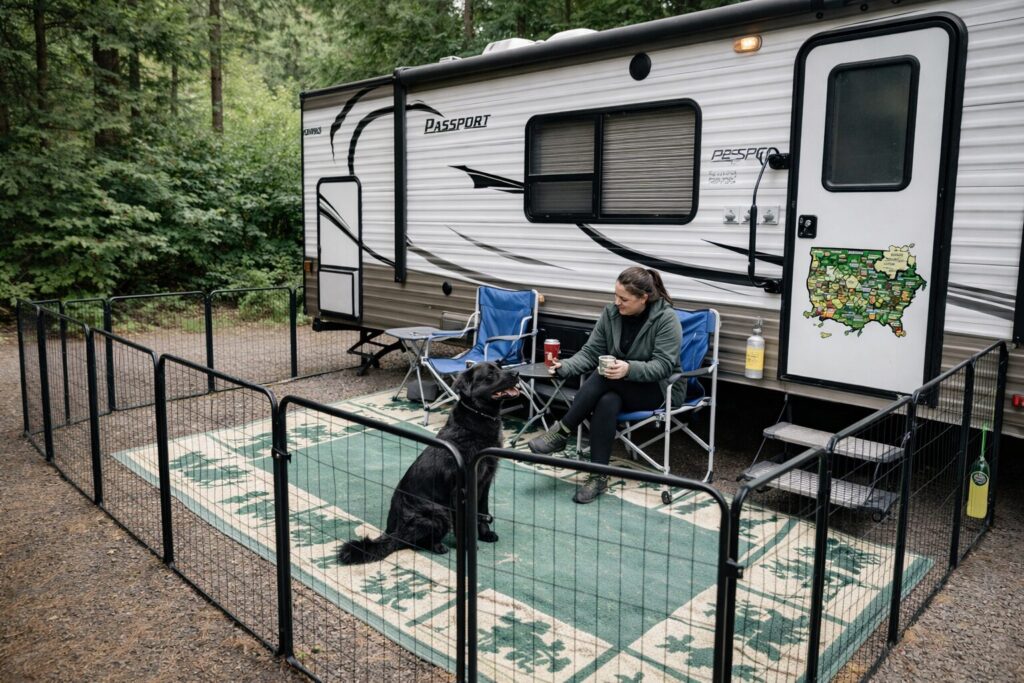
Portable pet fences are popular for giving dogs and cats supervised outdoor space, but they’re not always permitted. Many campgrounds restrict or ban them to prevent damage to grass, soil erosion, or conflicts with wildlife. For instance, some sites mandate that pets remain on a 6-foot leash at all times, viewing fences as an extension that could encroach on neighboring spots. In discussions from RV pet groups, members often complain about fines for setting up enclosures without permission, especially in high-traffic areas like national forests.
If fences are off-limits, a leash hook on your RV serves as an excellent alternative. This simple attachment, often a sturdy screw-in hook or clamp on the RV’s exterior, allows you to secure a long leash or tie-out cable, giving your pet a defined radius to roam while keeping them close to your site. It’s praised in community threads for its portability and compliance with leash laws, as it prevents pets from wandering into roads or other campsites. Pair it with a swivel stake for tangle-free movement, and always supervise to avoid escapes or entanglements. Cat owners adapt this by using harnesses, noting that it works well for adventurous felines trained to walk on leashes. Checkout our RV leash latch!

Safe Travel with Pets in RVs
Traveling is where many pet owners stumble, with heated debates in online groups about the best (and safest) methods. Some think it’s fine to let pets ride loose in the RV trailer while towing, but experts and experienced campers strongly advise against it due to risks like sudden stops, sway, or lack of climate control.
The Debate on Pets in the Trailer While Towing
A common misconception is that the trailer is a “cozy den” for pets during travel. However, this can be dangerous: Trailers aren’t designed for occupants while moving, lacking seatbelts or secure tie-downs. In accidents, unrestrained pets could be injured, and extreme temperatures (hot or cold) build up quickly without proper ventilation. Community stories highlight near-misses, like trailers overheating or pets panicking from road noise.

If you must transport pets in the trailer (e.g., for short distances or if your tow vehicle is full), do it safely: Use a crash-tested crate bolted to the floor, ensure excellent airflow with screened windows or fans, and monitor via a camera system. Stop frequently to check on them every 1-2 hours, and never leave them unattended in heat above 70°F or cold below 40°F. Better yet, keep pets in the tow vehicle for direct supervision!
Best Practices for Road Safety
For dogs: Harness them in the back seat with a seatbelt clip, or use a pet barrier to create a secure zone in the RV. Crates work well for anxious pups, providing a den-like space. Plan dog-friendly stops at rest areas or parks for potty breaks and exercise.
For cats: Crating is essential, as they often stress in new environments. Place the crate in a quiet spot with familiar bedding, and cover it partially to reduce visual stimuli. Some owners use pheromone sprays for calming. Recurring questions include: “How do I prevent motion sickness?” (Answer: Vet-prescribed meds or gradual acclimation trips).
General tips: Microchip your pets, carry health records, and locate emergency vets along your route. Avoid leaving pets in the RV unattended and use reflective window covers and fans for short absences.
Essential Gear and Packing List
| Category | Dogs | Cats | Why It’s Essential |
|---|---|---|---|
| Restraints | Sturdy leash (6-ft), harness, collar with ID tags, tie-out stake or RV hook | Leash-trained harness, portable enclosure if allowed | Complies with rules; prevents escapes. |
| Travel Safety | Crash-tested crate, seatbelt harness, pet barrier | Covered crate, calming aids | Protects during motion. |
| Health & Comfort | Food/water bowls, portable water filter, first-aid kit (tweezers for ticks, Benadryl for allergies), flea/tick prevention | Portable litter box, litter, scratching post | Maintains hygiene; addresses outdoor hazards. |
| Outdoor Gear | Poop bags, LED collar light, GPS tracker, cooling mat | Window screens for RV, outdoor harness | Enhances safety in low light or heat. |
Don’t forget extras like toys, blankets, and treats to keep them entertained.
Daily Life and Etiquette at Camp

Once settled, focus on harmony. Always clean up waste immediately – it’s a top complaint in groups. Keep noise down; if your dog barks excessively, use training aids or choose a site away from others. Protect from wildlife: Use elevated food storage and avoid leaving pets out at night.
For cats, provide hiding spots in the RV and supervised outdoor time. Dogs thrive on hikes, but stick to pet-allowed trails.
Health and Emergency Prep
Vet checks pre-trip are crucial—update vaccines and discuss preventatives for heartworm or parasites. Watch for heatstroke (panting, drooling) or hypothermia. Carry a pet thermometer and know the signs of distress.

Top Recurring Questions and Answers
From community insights:
- Can I leave my pet in the RV? Only briefly, with ventilation and monitoring.
- Best breeds for camping? All breeds!.
- Dealing with anxious pets? Gradual exposure, crates, and vet advice.
- International travel? Check quarantine rules; not covered here, but plan months ahead.
With these tips, your camping adventures with dogs and cats will be safe, fun, and stress-free. Happy trails!